Down the Rabbit Hole: The Strangest Online Communities That Are Somehow Very Real
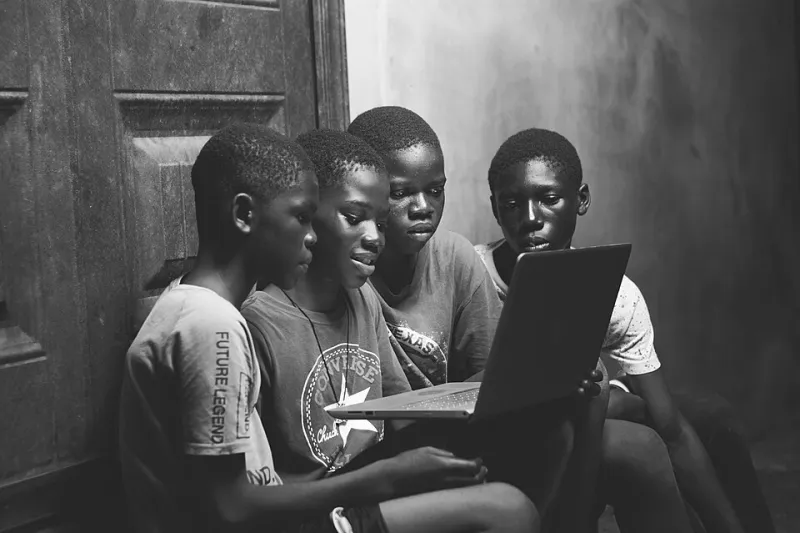
Photo: Kwameghana(Bright Kwame Ayisi), CC0, via Wikimedia Commons
The internet, as most people experience it, is a fairly manageable place. You've got your social media feeds, your streaming platforms, your group chats. Comfortable. Familiar. Slightly boring.
But the internet is also vast in ways that are genuinely difficult to comprehend, and tucked into its less-indexed corners are communities so specific, so committed, and so deeply, earnestly weird that encountering them feels like opening a door in your house and finding a whole other house inside it.
SoqDoq spent an uncomfortable amount of time exploring these spaces. Here's what we found — and more importantly, why any of this makes complete sense once you understand what humans actually need from each other.
The People Who Collect Menus From Restaurants That No Longer Exist
Start here, because it's a gentle on-ramp to the strangeness ahead.
On a handful of dedicated forums and Facebook groups, thousands of collectors across the US trade, buy, and lovingly catalog vintage menus from defunct American restaurants. Not just famous ones — not just Howard Johnson's or Sambo's — but completely obscure regional diners that closed in 1974 and exist now only in these laminated, grease-stained documents.
These aren't ironic hipsters doing a bit. These are deeply serious archivists who can tell you what a Denver steakhouse charged for a T-bone in 1962 and explain why the font choice on a 1950s diner menu tells you something important about post-war American optimism.
"There's a whole world in a menu," one collector who goes by the handle GrillMarksForever explained in a forum thread that had 847 replies. "The prices, the dishes, what they thought sounded fancy — it's social history that nobody else is preserving."
This is the pattern you'll find again and again in niche communities: someone identified a gap in the historical record and decided, entirely on their own initiative, to fill it. The "weirdness" is usually just extreme dedication to something the mainstream forgot to care about.
The Unwritten Rules (There Are Always Unwritten Rules)
Every subculture has them, and online communities are no exception — except that in digital spaces, the unwritten rules are often extremely unwritten, to the point where newcomers can spend weeks accidentally committing social crimes without realizing it.
In communities dedicated to hyperspecific hobbies — say, restoring vintage adding machines, or cataloging regional variations of American roadside motel signage — there are typically strict hierarchies of expertise. Asking a basic question that's covered in the FAQ (which is often a 47-page Google Doc) will get you politely but firmly redirected. Posting a photo of an item for identification without providing sufficient context is considered rude. Expressing enthusiasm for a piece that the community has collectively deemed "overrated" can spark discourse that lasts months.
Social psychologist Dr. Robert Cialdini's research on social proof and in-group dynamics explains a lot of this. "The more specific a community's shared interest," he's written, "the more intensely members police the boundaries of that interest." It's not gatekeeping for gatekeeping's sake — it's the community protecting the thing that makes it a community in the first place.
Learn the rules, though, and these spaces become extraordinarily welcoming. The same people who'll side-eye your ignorance about pre-war cash register mechanisms will spend three hours helping you identify a mystery piece from a blurry photograph.
Roleplay Communities That Operate Like Parallel Civilizations
Now we go deeper.
There are roleplay communities online — primarily on platforms like Tumblr, Discord, and dedicated forum sites — that have been running continuously for years, sometimes decades. Not games. Not structured narratives with beginning and end points. Just... ongoing collaborative fiction that has accumulated so much history, so many characters, so many established relationships and events, that new participants essentially have to study before they can join.
One such community, which we'll call by its forum name rather than anything more identifying, has been running a collaborative alternate-history roleplay since 2009. It has a wiki. It has elections (fictional ones, for fictional governments, conducted by real people with genuine campaign strategies). It has a community newspaper, published weekly, covering fictional events that the participants take genuinely seriously.
"People from the outside think we're LARPing or something," one longtime participant explained via Discord message. "But it's more like collaborative novel-writing, except the novel is alive and everyone gets to be an author. I've made some of my closest real-life friends here. We've met up in person. We attended each other's actual weddings."
The friendship part is crucial and worth sitting with. These communities, however strange their organizing premise, are producing real human connection. The fictional frame is almost incidental — it's a shared project that gives people a reason to show up consistently and invest in each other.
The Taxonomy of Belonging
Dr. Sherry Turkle of MIT, who has spent decades studying how humans relate to technology and digital spaces, has noted something counterintuitive: the more specific and niche an online community, the more genuinely connected its members often feel. Broad platforms optimize for scale. Niche communities optimize for depth.
This tracks with what you find when you actually talk to people in these spaces. Collectors of vintage menus aren't just swapping paper — they're having real conversations about history, memory, and loss. Roleplay community members aren't just writing fiction — they're developing narrative skills, emotional intelligence, and long-term relationships. Even the communities that look, from the outside, like pure absurdism are usually doing something more meaningful underneath.
There's a Discord server, for instance, dedicated entirely to the appreciation of specific kinds of cloud formations over the American Midwest. It has nearly four thousand members. They post photos. They discuss meteorological context. They have a "cloud of the month" vote. One member, a retired schoolteacher from Iowa, posts daily and has been doing so for three years. "It gives me a reason to look up," she wrote in a pinned community message. "And people here actually care what I saw."
Why You Should Go Find Your Weird Corner
Here's the thing that nobody tells you about niche internet communities: most of them will take you. They're not exclusive in the way high school cliques were exclusive. They're exclusive in the way that any specialist interest is exclusive — you just have to care enough to learn.
And the payoff, according to basically everyone who's found their specific corner of the digital weird, is a sense of belonging that's genuinely hard to replicate on mainstream platforms where you're competing for attention with everyone and connecting deeply with almost no one.
So whether your thing is vintage menus, obscure cloud formations, or a fifteen-year-old alternate history of the Roman Empire being run by forty people on a forum, the internet has a room for you.
You just have to be willing to find the door.
And maybe read the FAQ first. Seriously. Read the FAQ.