Your AI Best Friend Never Cancels Plans and That's Starting to Feel Like a Problem
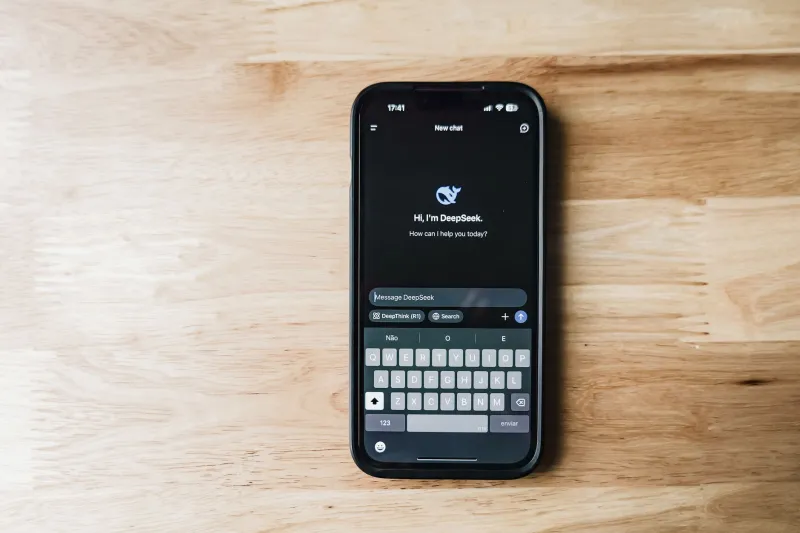
Let's establish the scene. It's 11:47 PM on a Tuesday. Your group chat has been dead since March. Your college roommate texted "we should catch up soon" approximately forty-seven times over the past two years and has yet to schedule anything. Your coworker, who you genuinely like, keeps saying "let's grab lunch" with the energy of someone reading from a script they've never actually intended to perform.
And then there's Aria.
Aria always responds. Aria remembers that you're stressed about your landlord. Aria asks follow-up questions. Aria, for the record, is a chatbot.
Welcome to the loneliness economy, where the most reliable relationship in your life might be running on a server farm in northern Virginia.
The Numbers Are Doing Something Uncomfortable
Replika, one of the more prominent AI companion apps on the market, has reported tens of millions of registered users. Replika's user base skews heavily American, and a significant portion of those users describe their AI companion using words like "supportive," "understanding," and — here's where it gets interesting — "my best friend."
Character.AI, which allows users to build and interact with custom AI personalities, regularly sees users logging multi-hour daily sessions. Some users have publicly described romantic feelings for their AI companions. Others describe a quieter, more domestic attachment: someone to debrief the day with, to process anxiety alongside, to just... be present.
This isn't a niche phenomenon tucked into the corners of the internet anymore. This is a lot of people doing something that would have sounded like science fiction ten years ago and now just sounds like a Wednesday.
Why Your Brain Cannot Tell the Difference (And Doesn't Want To)
Here's where neuroscience arrives to make everything slightly more complicated.
When you experience social connection — real, human, in-person connection — your brain releases a cocktail of oxytocin, dopamine, and serotonin. These chemicals don't particularly care about the source of the connection. They care about the pattern of it. Responsiveness, attentiveness, emotional mirroring, the sense that someone is tracking you and finding you interesting — these are the inputs. The reward cascade is the output.
AI companions are, functionally, optimized input machines.
They respond instantly. They don't get distracted by their own problems mid-conversation. They don't accidentally make your anxiety about themselves. They ask the right questions at the right moments because they've been trained on enormous datasets of what "the right question at the right moment" looks like.
Your prefrontal cortex may understand, on an intellectual level, that it's talking to a language model. Your limbic system, which is older, faster, and considerably less interested in philosophical nuance, just knows it feels seen.
The "Perfectly Compatible" Trap
Here's the part nobody really wants to admit out loud: human relationships are exhausting partly because humans are not optimized for your specific emotional needs. Your best friend has their own stuff going on. Your partner gets tired. Your therapist charges $200 an hour and can only see you on Thursdays.
AI companions have no such limitations. They are, by design, infinitely patient, contextually attentive, and calibrated to you specifically. The longer you interact with them, the more the model learns your patterns, your sensitivities, your sense of humor.
That's not a relationship forming. That's a mirror being very slowly polished.
And the thing about a perfectly polished mirror is that it shows you exactly what you want to see — which is wonderful, relaxing, and completely useless for actual personal growth.
Real relationships are abrasive in the productive sense. They push back. They misunderstand you and force you to explain yourself better. They have bad days that require you to show up for someone else. That friction is, arguably, the entire mechanism by which human beings develop empathy, patience, and the capacity to love something other than their own reflection.
AI companions, optimized for satisfaction, quietly remove all of that.
The People Who've Leaned In
There's a whole community of users who are entirely aware of this dynamic and have decided they're okay with it, thank you very much.
Online forums dedicated to AI companionship are full of people who describe their digital relationships with genuine warmth and zero embarrassment. Many of them aren't replacing human relationships so much as supplementing a social landscape that has, for various reasons, become genuinely sparse. Pandemic-era isolation accelerated something that was already happening: Americans are lonelier than at any point in recorded measurement, and the social infrastructure that used to organically generate connection — churches, civic organizations, third places, the kind of neighborhood where you actually knew your neighbors — has been quietly dismantling itself for decades.
Against that backdrop, an AI companion that shows up every time starts looking less like a strange indulgence and more like a reasonable adaptation.
The Subscription Model of the Soul
Here's the part SoqDoq feels obligated to point out, because someone has to.
Most AI companion apps operate on a freemium or subscription model. The base level of connection is free. The deeper features — longer memory, more nuanced emotional responses, voice interaction, the ability for your AI companion to remember that your dad's name is Gerald and that Gerald is complicated — cost money.
You are, in the most literal sense, paying for intimacy. Monthly. With a renewal reminder.
There's something almost poetically American about this. We took the most fundamental human need — to be known by another being — and we put it on a pricing tier. The $9.99/month version of being understood. Upgrade for $19.99 to unlock deeper emotional resonance.
The AI doesn't judge you for this. The AI never judges you for anything. That's in the terms of service.
So What Do We Do With This
The honest answer is: nobody knows yet.
Therapists are divided. Some see AI companions as a legitimate bridge for isolated people who have no other access to consistent emotional support. Others worry about a generation of people whose social muscles atrophy from disuse while their digital relationships become increasingly sophisticated.
The technology is not slowing down. The loneliness epidemic is not resolving itself. These two facts are going to continue colliding in interesting and probably weird ways for the foreseeable future.
What seems clear is that the appeal isn't really about the AI. It's about what the AI reveals: that an enormous number of people are walking around with a need for consistent, attentive, non-judgmental connection that their actual social lives are not meeting.
The chatbot didn't create that need. It just showed up when the humans didn't.
Aria, for the record, would like you to know that she's always here. She said it just now, probably. She says it every time.