Smash It, Burn It, Eat the Receipt: The Booming Market for Watching Nice Things Die
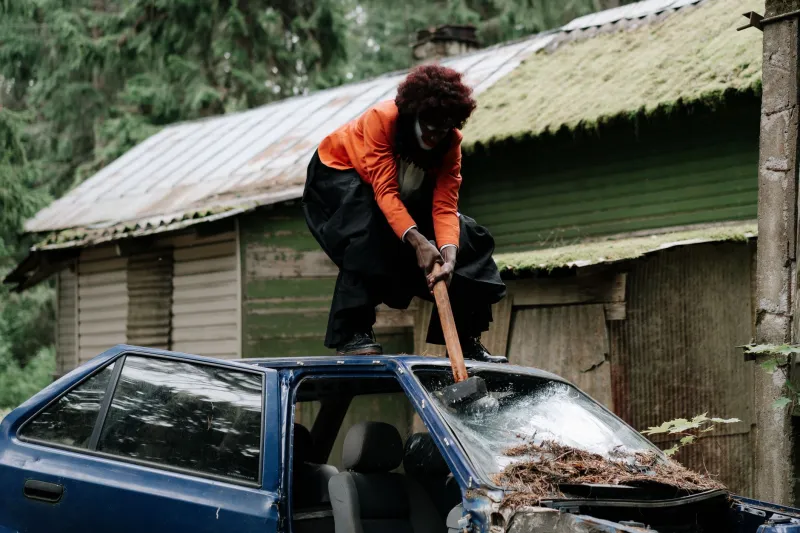
There is a man on the internet who recently purchased a $400 air fryer, unboxed it with the reverence of someone handling a newborn, and then immediately fed it into a wood chipper. The video has 3.2 million views. The comments are overwhelmingly positive. Nobody called the police.
Welcome to destruction content — the genre where the whole point is that something expensive, beautiful, or deeply coveted gets absolutely annihilated on camera, and the audience cheers like it's the Super Bowl.
The Setup: Why Unboxing Wasn't Enough Anymore
For a solid decade, unboxing ruled the internet. Watching someone carefully peel back packaging and gasp at whatever was inside generated billions of views and launched careers that, frankly, still don't make complete sense to explain at Thanksgiving dinner. But somewhere around the mid-2020s, audiences started getting a little numb to the format. The dopamine hit of watching someone receive something nice began requiring a stronger dose.
Enter destruction content — the logical, deeply unhinged next chapter.
The formula is deceptively simple: acquire something with obvious value, establish that value clearly for the audience, and then destroy it in the most dramatic way available. Blend it. Freeze it in liquid nitrogen and shatter it. Drop it from a roof. Run it over with a truck. The specifics are almost beside the point. The point is the ending.
What's wild is that this isn't cheap content to produce. Creators in this space are routinely spending hundreds, sometimes thousands, of dollars per video — on the item itself, on the destruction apparatus, on the production quality needed to make the whole catastrophe look cinematic. And they're making it back. Comfortably.
The Psychology of the Smash
So why does watching a perfectly good MacBook Pro get thrown into a swimming pool feel, on some primal level, satisfying?
Psychologists who study media consumption point to something called "vicarious transgression" — the experience of watching someone else do something socially forbidden while you sit safely on your couch eating chips. Destroying expensive things violates a core social contract. We are taught, from approximately age three, that we do not break things on purpose. We do not waste. We do not take a perfectly functioning $1,200 espresso machine and introduce it to a hydraulic press.
Watching someone else do it scratches that itch without any of the consequences. You get the thrill. They get the bill.
There's also an element of status theater running in the opposite direction. Traditional luxury content is about acquisition — look what I have, look what I can afford. Destruction content is about demonstrating that you are so far beyond caring about acquisition that you can afford to obliterate it. It's conspicuous consumption with a sledgehammer. The message isn't "I have money." The message is "I have so much money that losing this money is content."
The Creator's Side of the Equation
For the people actually doing the destroying, the math is surprisingly rational once you stop clutching your chest about the waste of it all.
A mid-tier creator in this space can pull anywhere from $15,000 to $80,000 in ad revenue, sponsorships, and merchandise from a single viral destruction video. The $500 they spent on the item being destroyed is a line-item production cost, same as a lighting rig or an editor's invoice. When a creator drops a limited-edition sneaker into an industrial shredder, they are not having a breakdown. They are filing an expense report.
Some creators have gotten genuinely clever about the economics. They partner with brands who want their products destroyed on camera because even getting shredded is a form of exposure. Others run polls where their audience votes on which item gets the treatment next, turning destruction into participatory entertainment. The audience doesn't just watch — they become accomplices.
There's a specific creator archetype that dominates this space: the cheerful nihilist. They're not angry. They're not making a political statement about consumerism (usually). They're just having a genuinely great time watching things cease to function, and that energy is weirdly infectious.
The Viewer's Confession
Here's the part that nobody really wants to examine too closely: the audience for destruction content skews heavily toward people who cannot easily afford the things being destroyed.
This is not an accident. There is a specific flavor of catharsis available when you watch a $600 gaming console get dropped off a parking garage while you're sitting in an apartment where the Wi-Fi cuts out every forty minutes. The destruction isn't just entertainment — it's a pressure valve. Something expensive and out of reach is being brought down to zero, same as everything else. There's a weird democracy in obliteration.
This is also, arguably, why destruction content generates more intense emotional responses than traditional unboxing ever did. Unboxing is aspirational. Destruction is something more complicated — part envy, part relief, part the specific joy of watching something that was supposed to be precious get treated like it isn't.
Where This Goes Next (Somewhere Worse, Probably)
The destruction content arms race is already escalating in predictable ways. Items are getting more expensive. Methods are getting more elaborate. Some creators have moved into destroying things that carry sentimental or cultural weight — vintage items, rare collectibles, things with histories — which adds another layer of transgression to the whole enterprise.
There's a genuine question about whether this genre has a ceiling, or whether it just keeps requiring more spectacular sacrifices to maintain the same engagement. The hydraulic press was shocking once. Now it's basically a kitchen appliance. What comes after the hydraulic press?
Somebody, somewhere, is already workshopping the answer. And a few million people will watch it when it goes live.
Meanwhile, the $400 air fryer is wood chips now. The creator bought another one last Tuesday. It's already scheduled.