They Don't Exist and We Love Them Anyway: The Strange Psychology of Following Fake People Online
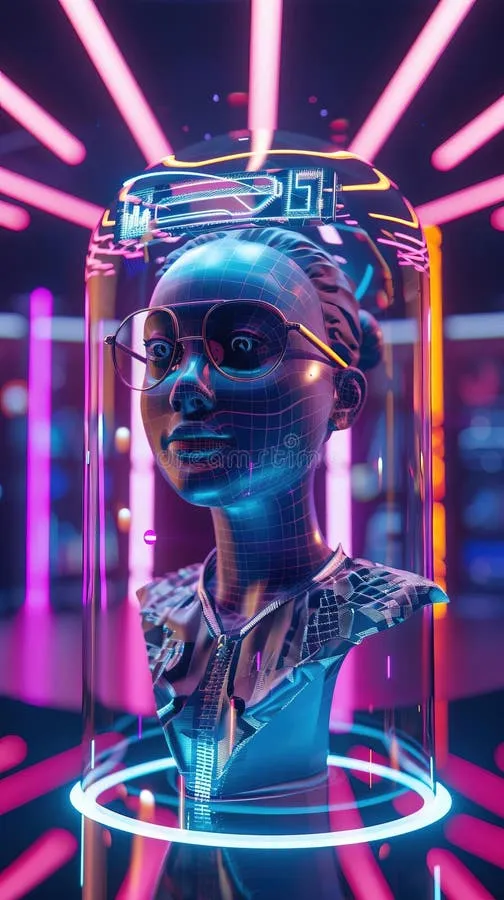
Photo: futuristic digital avatar social media influencer hologram, via thumbs.dreamstime.com
Lil Miquela has 2.6 million Instagram followers, a music career, and strong opinions about social justice. She has also never eaten a meal, experienced a bad hair day, or existed in any physical sense whatsoever. She is, to be perfectly clinical about it, a CGI character operated by a Los Angeles startup. And yet people argue passionately in her comments section, buy products she endorses, and feel genuinely connected to her.
This is either the most fascinating thing happening on the internet right now or the most alarming. Possibly both simultaneously.
The Pixel-Perfect Problem
Here's the paradox that keeps researchers and marketers equally awake at night: the more convincingly human an AI influencer looks, the more unsettled we tend to feel — right up until the moment we don't. Roboticist Masahiro Mori called this the "uncanny valley" back in 1970, describing the eerie discomfort triggered by things that are almost human but not quite. Traditionally this applied to robots and wax figures. Nobody anticipated we'd need to apply it to someone's sponsored post about oat milk.
Synthetic influencers occupy this valley with alarming confidence. Their skin is too smooth. Their lighting is always perfect. They never accidentally like a post from 2013 while drunk. And somehow, for a growing audience of very real people, this frictionless perfection is exactly the draw.
The psychological term you're looking for here is parasocial relationship — the one-sided emotional bond we form with media figures. We've been doing this with TV characters and celebrities for decades. AI influencers have simply turbocharged the mechanism by removing all the inconvenient humanness that used to interrupt the fantasy. Lil Miquela will never get canceled for something she said at a party in 2016. She will never have a breakdown on a livestream. She is, in the most literal sense possible, completely managed.
Why Your Brain Doesn't Actually Care
Here's the uncomfortable neurological truth: your brain processes social cues before it processes facts. When you see a face expressing warmth, your mirror neurons fire. When you read words that feel personal and directed at you, your social processing centers light up. None of that machinery stops to verify whether the source has a birth certificate.
Researchers at Stanford's Virtual Human Interaction Lab have spent years documenting how readily people form emotional responses to digital avatars. The finding, consistently, is that we are embarrassingly easy to bond with. Show us something with eyes and a personality and we will, on some level, care about it.
AI influencers exploit this with precision. They're designed — literally engineered — to maximize the cues that trigger connection. The casual selfie angle. The relatable caption about feeling overwhelmed. The strategic vulnerability dropped between two sponsored posts. Human influencers stumble into these techniques through trial and error. Synthetic ones have them baked in from the first render.
The Authenticity Illusion (And Why We Keep Buying It)
Here's where things get philosophically messy. One of the most repeated desires in digital culture is authenticity. We claim to want real, unfiltered, genuine content. We say we're exhausted by performance and curation. And then we follow a computer-generated lifestyle guru who has never had an unscripted moment.
The resolution to this contradiction is weirder than it sounds: authenticity, it turns out, was never really about truth. It was about the feeling of truth. A human influencer carefully crafting a "messy bun and no makeup" aesthetic is performing authenticity just as much as a CGI character is. We've always been following a constructed version of a person. AI influencers just removed the pretense that there's a real person underneath the construction.
In a strange way, the ones who openly disclose their synthetic nature — like Miquela, who has been transparent about being a "robot" — can feel more honest than a human influencer quietly airbrushing their life into a highlight reel. At least the algorithm isn't pretending.
The Money Is Very Real, Even If They Aren't
Brands have noticed. Of course they have. Synthetic influencers don't have bad days, won't accidentally endorse a competitor, can be deployed across multiple campaigns simultaneously, and will never ask for a higher rate because they just hit a million followers. From a marketing standpoint, they are disturbingly ideal.
Companies like Balmain, Samsung, and KFC have all run campaigns featuring AI or CGI personalities. The ROI metrics, by most accounts, are competitive with human influencer campaigns — and the control brands retain over the messaging is total. You cannot have a synthetic influencer go off-script. The script is the synthetic influencer.
The ethics get thorny fast. Several countries are moving toward requiring disclosure when influencer content is AI-generated. The US is, characteristically, still figuring out how to have that conversation while simultaneously generating more synthetic influencers at an accelerating rate.
So What Does This Actually Say About Us?
Maybe the most honest answer is that AI influencers are a mirror — an extremely high-resolution, algorithmically optimized mirror — held up to what we actually want from social media, stripped of the noise of real human messiness.
We want connection without conflict. Aspiration without the reminder that the aspirational person is also a person who occasionally has a terrible week. We want the warmth of a relationship with the low-maintenance overhead of a streaming subscription.
And if that sounds a little bleak, consider that humans have always used fiction this way. We've always loved characters who don't exist. We've always formed attachments to stories and archetypes and constructed personalities. The AI influencer is, in some sense, just the latest chapter in humanity's very long relationship with the imaginary companion.
The difference is that this imaginary companion has a merch store, a brand deal with a skincare company, and a comment section where real people are earnestly asking for life advice.
SoqDoq does not endorse asking a rendered CGI for life advice. But we completely understand why you might.