We've Already Done This Diet Before: America's Hilarious Habit of Reinventing Century-Old Food Cults
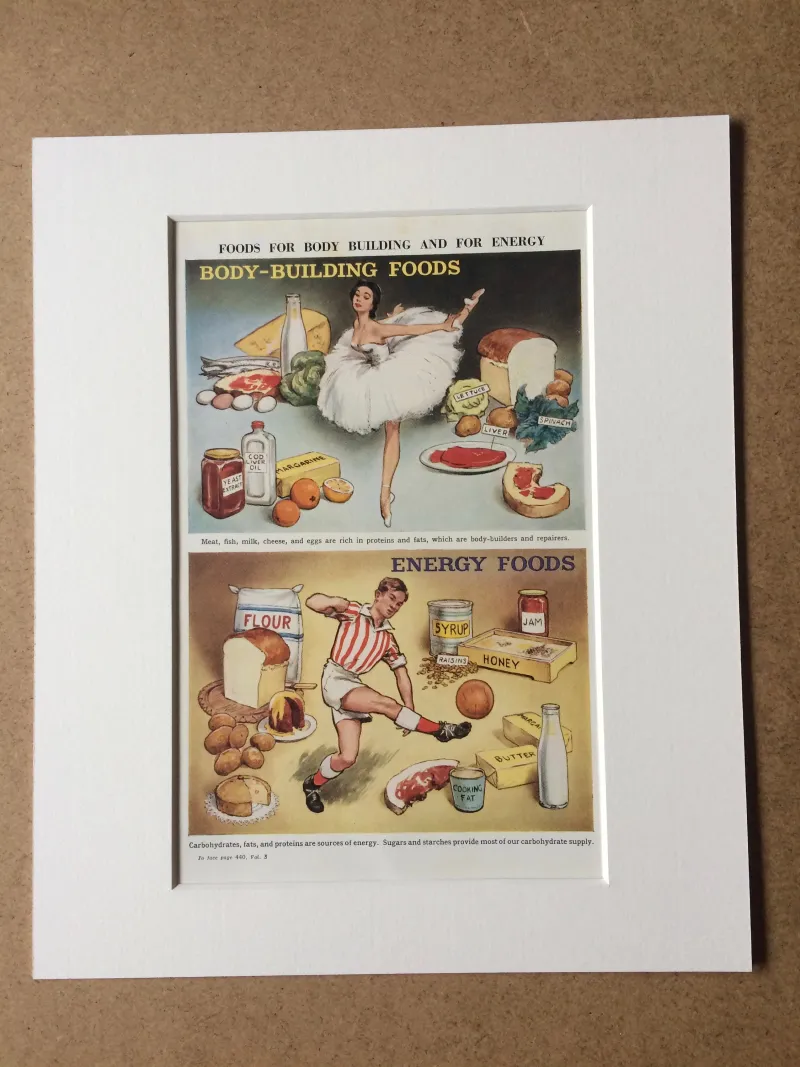
Photo: vintage retro health food diet wellness historical illustration, via i.etsystatic.com
Somewhere right now, a person with excellent cheekbones is explaining to their followers why they only eat fruit before noon. Somewhere else, another person is insisting that the secret to health is chewing your food until it becomes liquid. A third person — let's say they have a podcast — is suggesting that most of what you eat is basically poison and that the solution involves a significant quantity of raw liver.
These all feel like extremely 2025 takes. They are not. Every single one of them is a century-old idea wearing a ring light.
America has a profoundly short memory when it comes to dietary movements, and the internet — bless its chaotic little heart — is making that amnesia significantly worse.
Horace Fletcher: The Original Chew Bro
Let's start with Fletcherism, because it is genuinely one of the most unhinged wellness movements in American history and it had millions of followers.
Horace Fletcher was a San Francisco art dealer who, in the 1890s, got rejected by a life insurance company for being overweight. His response was to develop an elaborate theory about chewing. The core premise: every bite of food should be chewed between 32 and 100 times — until it is completely liquefied — before being swallowed. Any remaining solid matter should be spit out entirely.
Fletcher called this process "Fletcherizing" and he was not shy about it. He wrote books. He gave lectures. He attracted celebrity devotees including Henry James, Franz Kafka, and John D. Rockefeller. The U.S. Army and various universities ran experiments on Fletcherism. He became legitimately famous.
Now scroll to any current wellness account and find the content about "mindful eating," "slow eating for gut health," or "chewing your food thoroughly to improve digestion." The language is different. The ring light is better. The underlying idea is identical.
The Grape People Were Real and They Were Committed
In 1925, a South African writer named Johanna Brandt published The Grape Cure, which proposed that eating nothing but grapes — sometimes for weeks at a time — could cure cancer and a variety of other serious illnesses. The book became a phenomenon in the United States. Sanitariums offered grape cures. People traveled to receive them. The movement was enormous.
Now google "grape cleanse" or "fruit detox" and observe how the contemporary wellness space has reconstructed essentially the same framework — the idea that a single food, consumed in extreme quantities, can purify the body and reverse disease — with zero apparent awareness that this exact argument was made, debated, and largely discredited a hundred years ago.
The fruitarian movement, which holds that humans should eat primarily or exclusively fruit, has had multiple high-profile revivals in the last thirty years. Steve Jobs famously went through fruitarian phases. Current social media has entire communities dedicated to it. The 19th century version of this — built on a combination of religious philosophy and proto-wellness thinking — never really went away. It just cycles through new aesthetics.
The Algorithm Is a Time Machine With No Labels
Here's the mechanism that makes all of this possible: recommendation algorithms are not historians. They are engagement machines. They don't know that "dry fasting" (refusing both food and water for extended periods) was practiced by various 19th century health reformers and has a documented history of causing serious harm. They know that a video about dry fasting gets watched, shared, and commented on — including by people posting furiously in the comments about how dangerous it is, which counts as engagement — and so they show it to more people.
The result is that fringe dietary ideas from 1890 can go viral in 2025 with no historical context attached. A teenager watching a TikTok about the benefits of raw milk has no particular reason to know that the raw milk debate is not new, that it was extensively litigated in the early 20th century, or that pasteurization was introduced specifically because of the diseases that raw milk was spreading through American cities. The video doesn't mention any of that. The video has good music.
This is not a criticism of teenagers specifically. Adults are equally susceptible. The information architecture of social media doesn't reward historical context. It rewards novelty — or at least the feeling of novelty.
John Harvey Kellogg: The Wellness Villain Origin Story
No tour of American dietary history is complete without John Harvey Kellogg, the Battle Creek, Michigan physician who ran a famous sanitarium, invented corn flakes (long story, involves a strong anti-sex agenda), and promoted a range of health practices that read like a fever dream.
Kellogg was deeply opposed to meat, enthusiastically in favor of yogurt enemas, and convinced that most human illness stemmed from intestinal "autointoxication" — basically the theory that your gut was slowly poisoning you. He had theories about the correct flora that should inhabit the human intestine and went to considerable lengths to promote them.
The concept of "gut health" — currently one of the most dominant wellness categories in America, worth billions of dollars in probiotic supplements, fermented foods, and microbiome testing kits — traces a fairly direct philosophical line back to Kellogg and his contemporaries. The science has obviously evolved enormously. But the underlying cultural anxiety (your gut is wrong; here is a product to fix it) is remarkably stable across 130 years.
Why We Keep Doing This
The recurring reinvention of old dietary movements isn't just funny — though it is extremely funny — it's also revealing something real about American psychology.
Food anxiety in the United States has deep roots. The 19th century health reform movements emerged partly from genuine public health crises and partly from a broader cultural unease about modernity, industrialization, and the sense that something had gone wrong with the natural order. People wanted a system. They wanted someone to tell them exactly what to eat and exactly why, and they wanted that system to feel both scientific and morally significant.
Scroll through any current wellness account and you'll find exactly the same emotional architecture. The specific foods change. The underlying need — for certainty, for control, for a legible explanation of why bodies feel bad — stays constant.
Algorithms don't create that need. They just find it, amplify it, and serve it content that was originally written in a pamphlet in 1897.
The Part Where We Should Probably Learn Something
The honest takeaway here isn't that all dietary advice is nonsense — some of it is quite good, and actual nutritional science has made genuine progress. The takeaway is that the feeling of a revolutionary new dietary insight is an extremely unreliable guide to whether the insight is actually new, or revolutionary, or an insight.
Before you Fletcherize your lunch, try googling it first. History is right there, and it is, at minimum, a great source of humbling context.
Also: the grape cure didn't work. Just so we're clear.