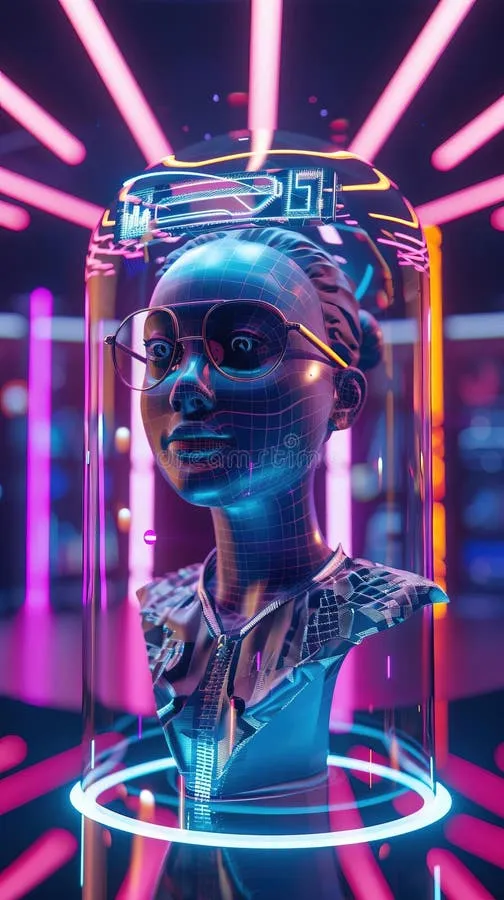
You Own It, You Just Can't Touch It, See It, or Prove It Exists: Welcome to the Digital Stuff Economy

Photo by Photo by Joonas Sild on Unsplash on Unsplash
Let's say you hand over four hundred dollars. In return, you receive something with no weight, no smell, no texture, and no physical address on planet Earth. You cannot frame it, insure it through a normal insurance company without getting laughed off the phone, or impress houseguests by pointing at it on a shelf. What you can do is tell people you own it and watch their faces cycle through confusion, skepticism, and — if they happen to be very online — genuine envy.
Welcome to the collector economy of the 21st century, where the hottest possessions are the ones that don't technically exist.
The Part Where We Explain What's Actually Happening
For the uninitiated: NFTs (non-fungible tokens) are unique digital certificates stored on a blockchain that represent ownership of a digital item — a piece of art, a video clip, a song, a meme. Virtual real estate is exactly what it sounds like: parcels of land inside digital worlds like Decentraland or The Sandbox, where a "location" in a virtual neighborhood can sell for hundreds of thousands of dollars. Digital fashion means buying clothing — jackets, sneakers, couture gowns — that your online avatar wears but your actual human body does not.
None of this is theoretical. In 2021, a digital artwork by the artist Beeple sold at Christie's for $69 million. A single virtual plot in Decentraland went for $2.4 million. Nike has sold digital sneakers. Gucci has sold virtual bags. The market has wobbled since its peak frenzy, but the people who believe in it have not gone anywhere. They are still buying, still holding, still explaining it to skeptical relatives at Thanksgiving.
The Psychology of Owning a Vibe
Here's the thing that makes this genuinely interesting rather than just funny: humans have always assigned enormous value to things that are, in a strict material sense, kind of made up.
A dollar bill is a piece of cotton-linen blend with some ink on it. It is worth something because we collectively agreed it is. A signed baseball card is a piece of cardboard. A limited-edition sneaker sitting in a box, never worn, is just a shoe that nobody's feet have touched. The value in all of these things is social, symbolic, and fundamentally a shared story we tell each other.
Digital collectors are not doing something categorically different from sneakerheads or art investors. They're doing something structurally identical — assigning value based on scarcity, provenance, and community consensus — in a medium that's newer and therefore weirder-looking to outsiders.
Dr. Russell Belk, a consumer researcher who has spent decades studying why humans collect things, has argued that our possessions function as extensions of our identity. We are what we own, in a psychological sense. If your identity increasingly lives online — your friendships, your reputation, your creative expression — then it follows, with a kind of cold logic, that your meaningful possessions would migrate there too.
The People Who Are Doing This Right Now
Collectors in this space tend to fall into a few overlapping camps.
There are the investors, who are essentially treating digital assets like volatile stocks and are very comfortable discussing floor prices, liquidity, and market cycles. They will not pretend the jpeg is beautiful. They will tell you it's a bet.
There are the community members, for whom the NFT or the virtual land parcel is essentially a membership card. Owning a Bored Ape Yacht Club NFT, for example, granted access to a community, events, and a kind of cultural cachet that its holders found genuinely valuable. The token was the ticket.
And then there are the true believers — people who will look you in the eye and tell you that digital art is art, that virtual space is space, and that the fact you can't hold something has never been a good reason to dismiss its worth. These are the people who will note, correctly, that you can't hold a song either, and yet here we all are paying for Spotify.
The Part Where the Skeptics Are Also Kind of Right
None of this means the critics are wrong. The NFT market has been a spectacular venue for fraud, hype, and the kind of speculative mania that ends with someone holding a receipt for something nobody wants anymore. Plenty of people lost real money. Some projects were outright scams. The environmental critique of energy-intensive blockchains is legitimate and ongoing.
The skeptic's position — that you are paying for a link to an image that anyone can right-click and save — is not wrong exactly. It's just incomplete. It mistakes the certificate for the point. When someone buys a painting at auction, they're not buying the image (anyone can photograph it). They're buying the object, the provenance, the story, the status. NFT collectors argue they're doing the same thing, just in a different substrate.
Whether that argument holds up depends almost entirely on whether the community around a given digital asset survives long enough to keep the story alive. Which is, again, exactly how it works with physical art and collectibles. The difference is that physical objects have the advantage of being physically there, quietly insisting on their own existence even when the market ignores them.
What This Says About Where We're Going
The digital stuff economy is, at its core, an early and extremely chaotic experiment in figuring out what ownership means when more of life happens in digital spaces. It's messy and it's frequently absurd and a genuinely uncomfortable number of people have made genuinely bad financial decisions in its name.
But the underlying question it's wrestling with is not going away: if you spend eight hours a day in a digital environment, does it matter what your space looks like? If your online identity is how hundreds of people know you, does it matter what you're wearing in it? If a community you care about uses a token to recognize its members, does that token have value?
For a growing number of Americans, the answer to all of those questions is yes — enthusiastically, expensively, sometimes regrettably yes.
The rest of us are free to find this hilarious. And we do. But we're also watching, because the line between "that's ridiculous" and "that's just how things work now" has a funny habit of moving without warning.
Somebody out there just paid three hundred dollars for a digital hat. Their avatar looks great. You can't take that away from them. Technically, you can't take anything away from them — there's nothing to grab.