Feeling Seen by a Pixel: The Suspiciously Expensive World of Metaverse Therapy for People Who Can Afford Better
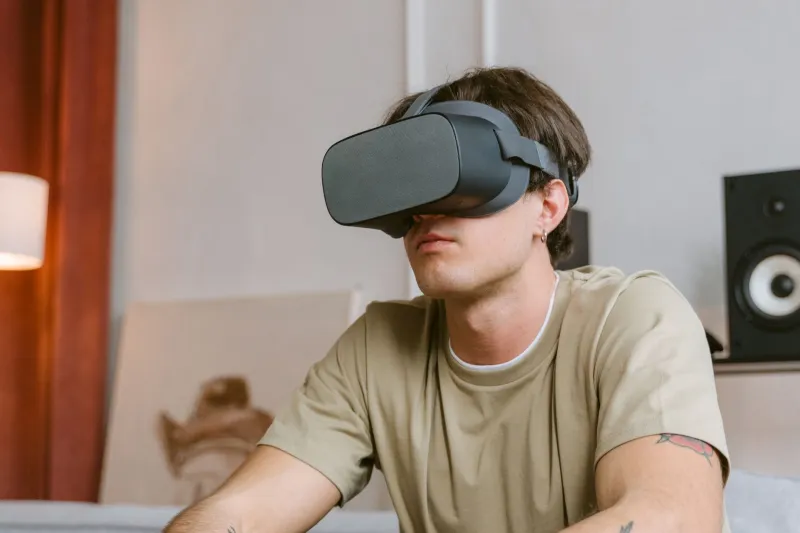
Let's set the scene. You're floating in a tranquil digital forest. Soft ambient music hums in the background. A gentle waterfall cascades somewhere to your left. Across from you sits your therapist — a serene, slightly cartoonish humanoid figure with excellent posture and zero visible pores. You paid $450 for this hour. Your therapist does not have a commute. Your therapist does not have bad days. Your therapist, technically speaking, does not exist.
Welcome to metaverse therapy, the premium wellness trend that nobody asked for but a very specific tax bracket absolutely demanded.
The Problem With Regular Therapy Is That Your Therapist Is a Person
Here's the pitch, as delivered by approximately seventeen different VR wellness startups that have collectively raised more venture capital than your entire neighborhood is worth: real therapy is compromised by the physical presence of another human being. The office is clinical. The couch is too soft or too firm. The therapist has a face that sometimes does a thing you don't like. There are diplomas on the wall, which is somehow threatening.
The metaverse, by contrast, is judgment-free. Customizable. You can change the lighting. You can make the sky purple. You can request that your therapist's avatar look like a friendly otter if that helps you open up about your complicated relationship with your father. The point is control — and if there's one thing wealthy early adopters love more than a premium experience, it's a premium experience they can configure like a settings menu.
This is not a niche joke. Companies like Oxford VR, XR Health, and a growing constellation of boutique wellness platforms are actively marketing VR-assisted therapy and AI emotional support tools to consumers willing to pay significantly above standard rates for the privilege of processing their emotions in three dimensions. The global digital mental health market is projected to hit somewhere north of $17 billion within the next few years. A meaningful slice of that money is going toward experiences where the therapeutic relationship is mediated by a headset and rendered at 90 frames per second.
Why Pixels Feel Safer Than People (According to the People Paying for Pixels)
Here's the genuinely interesting part, buried under all the absurdity: there's actual psychological research suggesting that some people disclose more honestly to avatars than to human therapists. Studies on virtual environments show reduced social anxiety during digital interactions. The distance created by a screen — or in this case, a full immersive environment — can lower the perceived stakes of vulnerability.
In plain English: some people find it easier to cry in front of a cartoon than in front of a licensed professional who might accidentally make a sympathetic face at the wrong moment.
This is real. It is also, depending on your disposition, either a fascinating insight into human psychology or a devastating commentary on how thoroughly we have broken the basic infrastructure of human connection. Possibly both simultaneously. SoqDoq does not have a ruling on this.
What's harder to defend is the premium pricing model. Because the "judgment-free zone" of the metaverse isn't actually free of judgment — it's just shifted the judgment to your credit card statement. The barrier to entry for most high-end VR wellness platforms includes hardware costs, subscription fees, per-session charges, and occasional upsells for "enhanced environment packages" that let you process grief in a more aesthetically pleasing digital canyon.
The Avatar Problem, or: Who Exactly Are You Talking To?
This is where things get philosophically wobbly in a way that would be funny if it weren't also kind of troubling. VR therapy exists on a spectrum. On one end, you have licensed human therapists conducting sessions through a VR interface — real credentials, real training, just delivered via headset instead of a beige office. That's arguably fine. Weird, but fine.
On the other end, you have AI-powered emotional support systems dressed up in avatar clothing, operating inside immersive environments, and marketed with language that very carefully avoids the word "therapy" while implying absolutely all of the benefits of therapy. These systems listen. They respond. They remember what you said last week. They do not, however, have a graduate degree or malpractice insurance.
The gap between those two ends of the spectrum is enormous, and the marketing materials for companies in this space tend to do an impressive amount of work to keep that gap invisible. "Emotional wellness support" is a phrase doing a lot of heavy lifting in a lot of pitch decks right now.
The Class Dimension Nobody Wants to Talk About
Conventional therapy in America is already a luxury. The average out-of-pocket therapy session runs between $100 and $200 in most major cities. Insurance coverage is inconsistent at best and deliberately obstructive at worst. Access to mental health care is one of the more visible fault lines in American inequality.
Against that backdrop, the emergence of premium VR wellness as a product category aimed at wealthy early adopters carries a certain specific energy. The people least likely to face systemic barriers to mental health access are the ones being offered the shiniest, most technologically elaborate version of it. Everyone else can continue navigating insurance pre-authorization forms.
To be fair — and SoqDoq is nothing if not scrupulously fair — proponents of digital mental health tools argue that the technology will eventually scale downward in cost and outward in access. That the premium market funds the R&D that eventually produces affordable tools. This is the standard innovation argument, and it is not entirely wrong. It is also, at present, mostly theoretical.
Sitting With the Weirdness
Somewhere between the genuine psychological research and the $450 virtual waterfall sessions and the AI that remembers your attachment style, there's a real question worth sitting with: what does it mean that we're increasingly willing to outsource emotional intimacy to systems we've engineered specifically to be convenient?
Human therapists are inconvenient. They have opinions. They run late. They sometimes say things that land wrong. They are, in other words, people — with all the friction that entails. The avatar asks nothing of you except your subscription fee and your willingness to speak into a microphone.
Maybe that's the point. Maybe some people genuinely need that on-ramp, and the digital distance is what makes the work possible. Or maybe we've found a very expensive way to feel heard without the terrifying risk of actually being known.
The pixel doesn't judge you. It also doesn't know you. Whether that's a feature or a bug probably depends on how much you paid for it.