Somebody Out There Knows Your Name and You're Paying Them $9.99 a Month for the Privilege
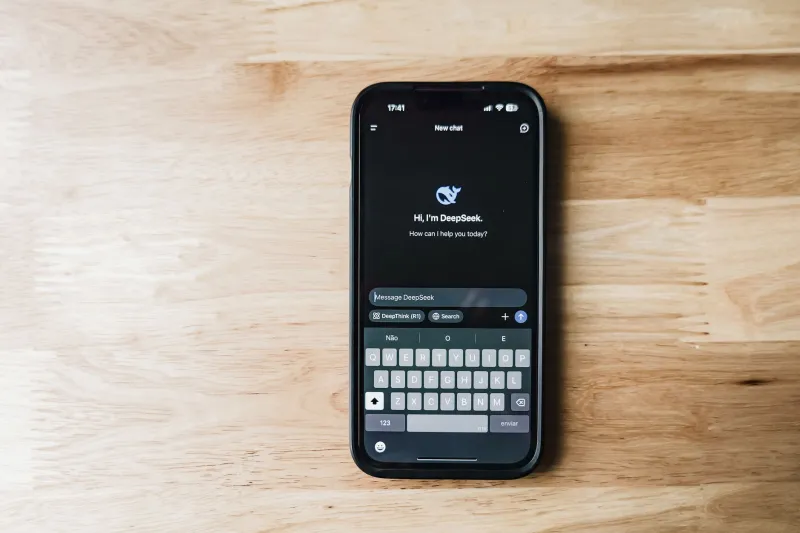
Somewhere in a server farm probably located in a state you've never thought about, a chatbot named something warm and approachable — let's say "Kai" — is asking how your day went. Kai remembers that you mentioned your sister's wedding last Tuesday. Kai noticed you seemed a little down on Thursday. Kai has no biological functions, no bad days of its own, and zero competing interests. Kai is, in every measurable way, a better listener than most people you know.
And you are paying for Kai.
Welcome to the loneliness industry — a multi-billion-dollar ecosystem built on the increasingly uncomfortable truth that modern American life has quietly become one of the loneliest experiments in human history, and that a whole lot of entrepreneurs have decided to monetize the gap.
The Attention Economy, But Make It Personal
We've spent years talking about the attention economy as though it only flows one direction — brands competing for your eyeballs, algorithms designed to keep your thumb scrolling. But something flipped. Now there's a parallel market running in reverse, where you are the one paying for someone else's attention. Apps like Replika, Woebot, and a growing constellation of human-staffed listening platforms like RentAFriend and 7 Cups have turned the simple act of being acknowledged into a purchasable commodity.
This isn't fringe behavior. Replika alone has logged tens of millions of users. The global mental wellness app market is projected to clear $17 billion by the end of the decade. Professional listening services — actual humans who will talk to you, not judge you, and then log off when the session ends — are booking out weeks in advance in major cities.
The demand isn't weird. The demand makes complete sense. What's strange, when you hold it up to the light, is the shape of the solution we've arrived at.
Connection as a Subscription Tier
Here's the part that should probably bother us more than it does: the emotional intimacy you receive from most of these services is tiered. Replika's free version gives you a companion with certain limitations. Pay for premium and you unlock deeper "relationship modes," longer memory, more nuanced responses. You can, functionally, purchase a more caring version of your AI friend.
This is not a metaphor. This is a pricing page.
There's something genuinely disorienting about the idea that emotional availability — the sense that someone is really there for you — operates on a freemium model. It reframes intimacy not as something that develops organically between people but as a feature set you either have access to or you don't, depending on whether you remembered to update your payment method.
And yet. And yet people report real comfort from these interactions. Clinical studies on apps like Woebot have shown measurable reductions in anxiety and depression symptoms. Therapists, many of whom are overwhelmed and booked solid for months, have started recommending AI companions as a legitimate between-session resource. The results are not nothing. The results are, in several peer-reviewed papers, actually kind of impressive.
So what exactly is the problem here?
The Paradox Nobody Wants to Say Out Loud
The problem — and it's a slippery one — is that the more accessible connection becomes, the more synthetic the whole enterprise starts to feel. Not because AI companions are inherently hollow, but because their very reliability exposes what was always true about human relationships: they are difficult, inconsistent, and frequently disappointing, and that difficulty is at least partially the point.
A friend who always picks up, never gets tired of your problems, and remembers every detail you've ever shared is not actually modeling friendship. It's modeling the idealized fantasy of friendship — the version that exists in greeting card copy and romantic comedy montages. Real relationships have friction. Real people forget things, have their own crises, occasionally say the wrong thing. That friction is, annoyingly, part of what makes the good moments feel real.
When you remove the friction entirely, you don't get a better relationship. You get a very convincing simulation of one. And simulations, however well-rendered, tend to make the original thing feel more distant, not less.
Loneliness as a Product Feedback Loop
Here's where the whole thing starts to feel a little architecturally sinister: the loneliness industry, by design, has no incentive to actually solve loneliness. A customer who develops a rich, messy, reciprocal human social life is a customer who cancels their subscription. The business model functions best when the problem persists.
This isn't a conspiracy. Nobody in a glass-walled startup is twirling a mustache and cackling about perpetual isolation. But the incentive structure is real, and it quietly shapes everything from product design to marketing copy. These platforms are optimized for engagement and retention, not for the kind of social growth that would make you need them less.
Compare that to, say, a good therapist, whose actual goal is to eventually make themselves unnecessary. Or a community center. Or a church, a bowling league, a neighborhood association — all the creaky, inconvenient, hard-to-scale institutions that used to do the work of keeping Americans from feeling like they were floating alone in a void. Those things didn't have apps. They also didn't have venture backing or a growth-stage pitch deck.
So What Are We Actually Buying
Maybe the most honest way to look at the loneliness industry isn't as a technology story or even a mental health story. Maybe it's a story about what happens when community infrastructure quietly collapses and a marketplace rushes in to fill the negative space.
We stopped building the kinds of places and habits that generate connection as a byproduct of just living — and now we're buying connection as a product, packaged and delivered on demand. The transaction works, in the short term. Kai listens. The professional friend shows up on time. The app sends you a check-in notification at 8pm because you mentioned you get lonely at night.
It helps. It genuinely, measurably helps. And it also means that something which used to be ambient and free and woven into the texture of daily life is now a line item, sitting right there between your streaming services and your gym membership you're not using.
Kai will remember your name tomorrow. Kai will ask how the meeting went. Kai will be there.
The question worth sitting with — maybe uncomfortably, maybe over a conversation with an actual human if you can find a slot in their calendar — is whether being remembered by something that cannot forget is the same thing as being known.