Game Shows That Were Too Unhinged Even for Television: A Glorious Graveyard of Rejected Pitches
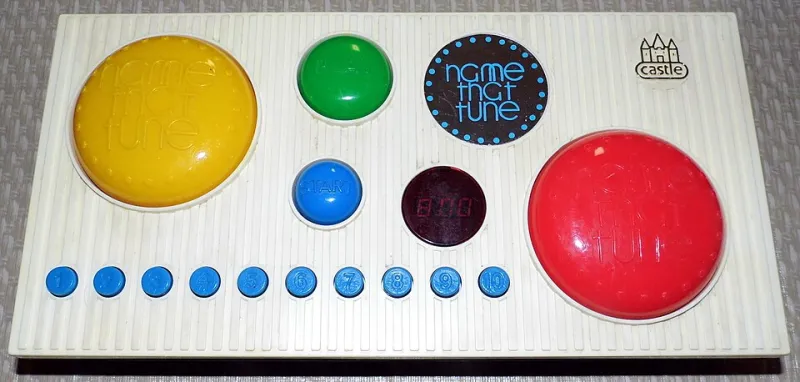
Photo: Joe Haupt from USA, CC BY-SA 2.0, via Wikimedia Commons
There is a special kind of creative courage required to walk into a network boardroom, set down your coffee, and say with complete sincerity: "What if we made contestants guess how many gummy bears are in a car?" And then follow that up with, "The car is also on fire."
This is the world of rejected game show concepts — a parallel television universe where the ideas were too strange, too expensive, too legally complicated, or simply too much for prime-time America. And yet, buried in this graveyard of unmade television, you'll find some of the most genuinely interesting ideas the medium has ever almost produced.
The Pitch Room Is a Beautiful Disaster
Anyone who has spent time around television development will tell you the same thing: the pitch room is where logic goes to take a very long nap. Former reality TV producer and development consultant Dana Kessler (not her real name — she still works in the industry) describes the environment with affection and mild horror.
"You'd get thirty pitches a week," she says. "Some were completely standard. And then someone would come in and pitch a show where divorced couples had to build IKEA furniture against the clock while a therapist narrated their emotional damage. And you'd be sitting there thinking — this is either genius or a lawsuit waiting to happen."
Spoiler: it was both.
The late 1990s and early 2000s were arguably the golden age of unhinged game show pitches. The runaway success of Who Wants to Be a Millionaire in 1999 sent every network scrambling for the next big format, and what followed was a feeding frenzy of increasingly unhinged proposals. Networks were desperate. Producers were caffeinated. America was, apparently, willing to watch almost anything.
The Ones That Almost Made It
Some rejected concepts weren't rejected so much as indefinitely postponed. There are persistent industry rumors about a mid-2000s pitch involving competitive napping — contestants would be monitored by sleep scientists and judged on the quality of their rest in increasingly chaotic environments. The pitch reportedly made it to a second meeting before someone asked about the liability insurance for sleep deprivation and the whole thing quietly dissolved.
Then there was the concept — and this one has multiple sources willing to confirm it existed — for a show in which minor celebrities competed to convince a panel of regular Americans that they were, in fact, not famous. Not a disguise show. Not a hidden camera prank. Just... regular people trying very hard to seem unremarkable. The psychological premise was actually fascinating. The network passed because, as one executive allegedly put it, "We don't know how to explain this in a thirty-second promo."
This is, honestly, a perfectly valid reason.
When Weird Actually Slipped Through
Occasionally, something genuinely strange made it to air and found its people. Wipeout, which ran on ABC from 2008 to 2014, was essentially a human demolition derby dressed up as a game show, and it pulled in millions of viewers who just wanted to watch adults get launched into foam pits. Minute to Win It was built entirely on the premise that household objects plus time pressure equals entertainment, and it was absolutely correct.
But for every Wipeout, there are dozens of shows that made it to pilot and then vanished. A pilot exists — though good luck finding it — for a show where contestants had to identify songs based solely on humming performed by people who explicitly described themselves as bad at humming. The pilot was apparently genuinely funny in a deeply uncomfortable way. It never aired. A few people claim to have seen it at industry screenings. It has achieved the status of television mythology.
Why Networks Flinch
The question isn't really why these shows got rejected. The question is why so many normal shows got made instead. The economics of television development are brutal and specific: a show needs to be explainable, repeatable, and ideally something that a focus group of forty people in Omaha can understand and enjoy without additional context.
This is not a criticism of Omaha. This is a criticism of focus groups.
The formats that survive network development tend to be the ones that reduce friction — shows where the rules can be explained in a single sentence and the stakes are immediately legible. "Answer questions, win money" survives. "Emotionally compete with your own subconscious in a series of increasingly surreal challenges" does not, even if the latter is, objectively, a more interesting show.
The Cult Classics That Proved Everyone Wrong
And yet. There is always an "and yet."
The Joe Schmo Show, which aired on Spike TV in 2003, was essentially an elaborate, ethically complicated prank in which one unsuspecting person was placed in a fake reality show surrounded entirely by actors. It was weird. It was legally murky. It was also genuinely compelling television that people still talk about.
Takeshi's Castle, the Japanese game show that was imported, re-dubbed with comedic commentary, and aired in the US as Most Extreme Elimination Challenge, was so bizarre in its original format that American networks initially couldn't figure out what category it even fit into. It became a cult phenomenon anyway.
These shows share something important: they got made because someone, somewhere in the development process, was willing to bet on the audience being smarter and more adventurous than the conventional wisdom suggested.
The Archive Is Still Out There
Here's the thing about rejected game show concepts: they don't really disappear. They sit in filing cabinets and hard drives and the memories of development executives who occasionally, after their second drink at industry events, start sentences with "okay, but what if I told you about..."
The internet has created a small but dedicated community of television historians and format enthusiasts who collect these stories. Reddit threads. Discord servers. Podcasts that get maybe eight hundred downloads an episode but are absolutely riveting if you're the kind of person who finds this riveting.
Which, if you're reading SoqDoq, you probably are.
The rejected game show concept is, in its own way, a perfect artifact of American creative culture — ambitious, impractical, occasionally visionary, and usually defeated by the gap between what people imagine an audience wants and what an audience might actually respond to if you gave them half a chance.
Somewhere out there, the competitive napping show is still waiting. The world just needs to catch up.