Step Right Up and Suffer: The Bizarre Spectacle of Competitive Tragedy in the Age of Viral Pain
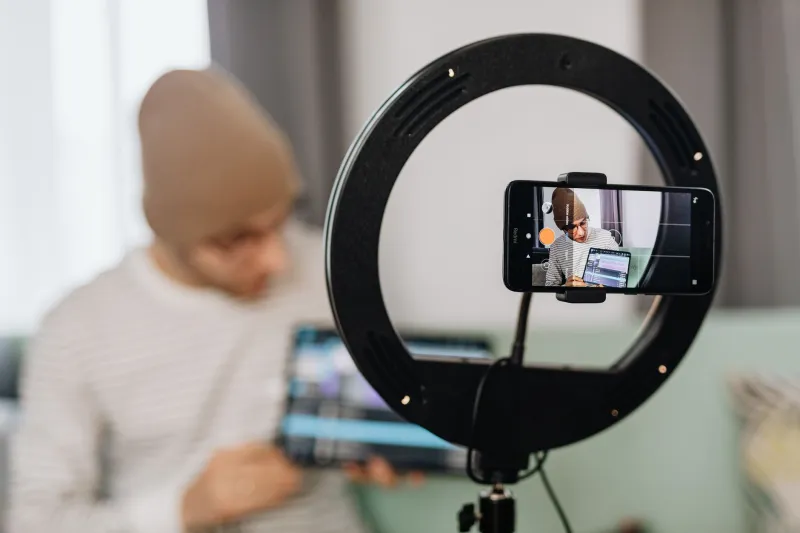
There is a video currently living somewhere on TikTok — and you have almost certainly seen one exactly like it — where a person stares directly into a front-facing camera, takes a very deliberate breath, and begins to describe the single worst sequence of events that has ever happened to a human being. By the third sentence, the comments are already filling up. By the sixth, someone has typed "okay but mine is worse" and a whole new competition has begun without anyone officially starting it.
Congratulations. You have just witnessed the Loneliness Olympics in its natural habitat.
The Sport Nobody Signed Up For (But Everyone Is Playing)
Competitive suffering is not new. Humans have been one-upping each other's bad days since the invention of language, probably. What is new is the infrastructure. We now have platforms optimized for emotional performance, algorithms that reward the most visceral content, and audiences of millions ready to rank your hardships like judges at a regional gymnastics meet.
Reddit has entire subreddits — some enormous, some wonderfully specific — where strangers post their worst experiences and wait for the community to validate, dispute, or silently upvote their pain into prominence. TikTok has the "trauma dump" format, which sounds clinical but is really just a confessional booth with ring lighting. Instagram has the carousel post where slide one is a sunset and slide seven is a revelation about childhood that probably should have stayed in a journal.
The mechanics are remarkably consistent across all of them: share something painful, wait for the crowd to respond, measure your worth in engagement. It is, if you squint at it sideways, exactly like a game show. Except nobody wins a car.
Why Are We Watching This?
Here is the uncomfortable part, and SoqDoq is contractually obligated to make you sit with it for at least a paragraph: audiences love this content. Not in a guilty-pleasure way. In a deeply engaged, algorithmically rewarded, this-is-now-a-genre way.
Psychologists have a few theories about why, and none of them are particularly flattering to anyone involved.
The first is parasocial suffering — the idea that watching someone else process pain gives viewers a safe emotional workout. You feel something real, you get the neurological benefits of empathy and catharsis, and then you close the app and eat lunch. It costs nothing. It risks nothing. It's a feelings subscription with no cancellation fee.
The second theory is darker: social comparison as comfort. When your own life feels like a slow disaster, finding someone whose disaster is louder and faster is temporarily soothing. This is not a new human impulse. What's new is that we've built a whole entertainment economy around it.
The third theory — and this one comes up a lot in behavioral research — is that witnessing vulnerability creates community. Even fake community. Even parasocial community with someone you will never meet and whose name you will forget by Thursday. The brain does not always distinguish between real belonging and the performance of belonging, and it will take whatever it can get.
The Performer's Dilemma
Now flip it around and consider the people actually doing the sharing.
For some of them, this is genuinely therapeutic. Narrative processing — the act of telling your story, shaping it, giving it a beginning and a middle and a point — is a real psychological tool. Therapists use it. Trauma researchers endorse it. The fact that it happens in front of 40,000 strangers instead of one licensed professional is a logistical detail that the brain, again, does not always flag as significant.
But there is a version of this that slides quietly into something else. When the story starts getting refined for maximum emotional impact. When the pacing gets tighter and the pauses get more deliberate and the lighting gets better. When you find yourself checking the analytics on your childhood.
At some point — and the line is blurry enough that crossing it is almost invisible — processing becomes performing. And performing, by definition, requires an audience that is there to be entertained, not to help.
This is the part nobody really wants to talk about: the incentive structure of public pain-sharing actively rewards more suffering, louder suffering, more dramatic suffering. The algorithm does not care about your healing arc. It cares about your watch time.
The Comment Section as Colosseum
Perhaps the most revealing element of the whole enterprise is what happens in the replies.
For every hundred comments expressing genuine sympathy, there is a thread where someone has decided to audit the original poster's trauma for authenticity. Was it really that bad? Did they really have no options? Are they leaving something out? The crowd appoints itself judge, jury, and forensic accountant of someone else's worst memories, and it does this with the casual confidence of people who have never had to justify their pain to a stranger.
This is the Loneliness Olympics in its purest form: not just the performance of suffering, but the scoring of it. Points for specificity. Bonus points for crying on camera without wiping your face. Deductions for seeming too composed, or not composed enough, or for having a background that looks like you maybe own more than one piece of furniture.
The audience is not cruel, exactly. It is just doing what audiences do: evaluating the show.
Is Any of This Actually Fine?
Here is the honest answer: probably some of it is, and some of it very much isn't, and we currently have no reliable way to tell which is which.
Public storytelling about pain has a legitimate history. Support groups, memoirs, community organizing — these are all built on the idea that shared suffering creates shared strength. The fact that the venue is now a phone screen and the support group has 2.3 million followers does not automatically make it fake.
But the competitive element — the implicit ranking, the algorithmic pressure to escalate, the comment-section judges with their invisible scorecards — introduces something that actual support groups do not have. An incentive to perform rather than heal. A reason to stay in the story rather than move through it.
The most honest thing you can say about competitive public suffering is that it is doing several different things simultaneously, for several different people, and collapsing all of them into a single cultural phenomenon makes it easier to dismiss or celebrate than it deserves.
Some people are healing in public. Some people are drowning in public and calling it content. Some people are watching because they are lonely and the screen is warm. Some people are watching because they feel better when someone else's life is visibly worse.
All of them are participating in the same sport. None of them agreed on the rules. And the algorithm, as always, is just keeping score.
SoqDoq does not endorse competitive suffering as a wellness strategy. We do, however, acknowledge that you've probably already opened TikTok twice since starting this article, and we respect the commitment.