Your Phone Cried Before You Did: The Creepy Science of Emotional Surveillance Tech
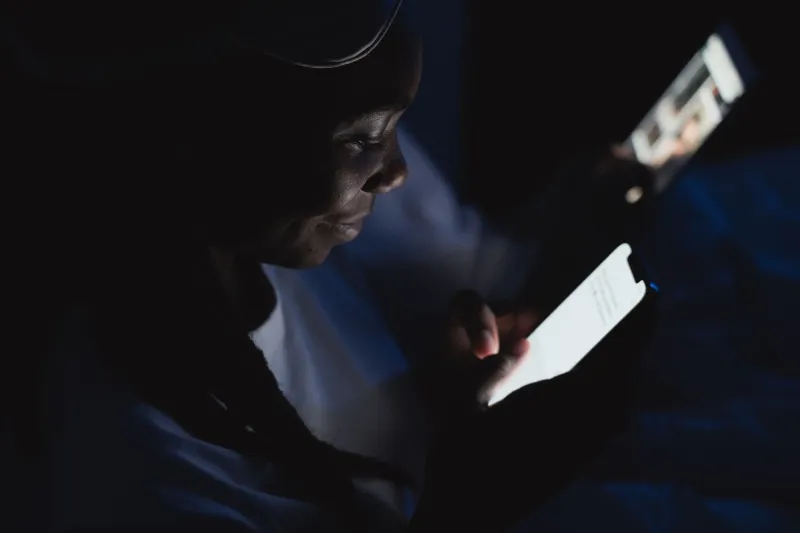
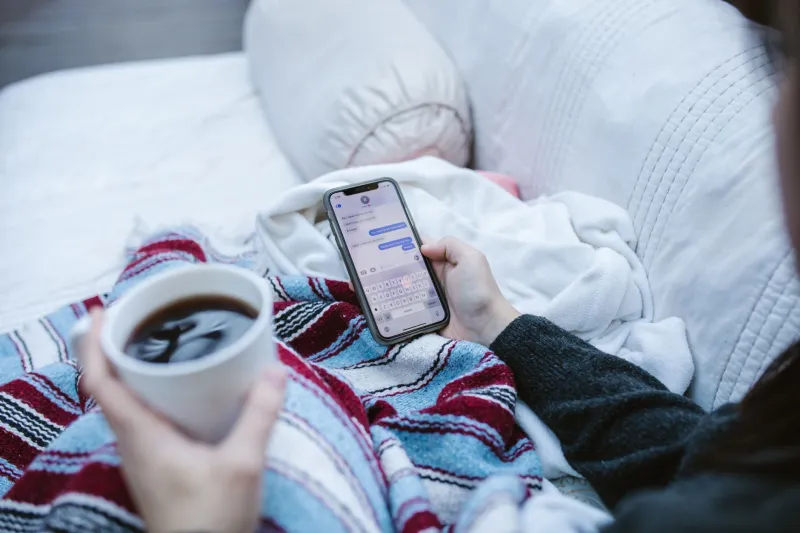
Let's say you're having a bad week. Not catastrophically bad — just the low-grade, existential kind where you keep refreshing the same three apps, eating cereal at unconventional hours, and typing half-finished texts to people you probably shouldn't contact. Normal human stuff. Deeply relatable.
Here's the part that should make you set down your cereal: your phone already knows. It knew before your best friend noticed. It knew before you fully admitted it to yourself. And somewhere in a data center the size of a suburban Costco, that knowledge is being quietly converted into a targeting opportunity.
Welcome to the emotional surveillance economy, where your feelings are a product and the factory floor is your lock screen.
The Tells You Didn't Know You Were Giving
Emotional detection technology sounds like science fiction — the kind of thing a 1990s thriller would use as a villain's gimmick. In reality, it's considerably more mundane and considerably more widespread. Modern smartphones and the apps living inside them track behavioral signals that, in aggregate, paint a surprisingly accurate picture of your mental state.
Think about what your phone observes in a single day. It clocks how fast you type and whether your error rate is climbing. It notices if you're scrolling more slowly than usual — a pattern researchers have linked to low mood and reduced cognitive engagement. It registers how long you stare at a photo before moving on, how many times you open an app without doing anything, and whether you're leaving the house at all based on GPS inactivity. Your screen brightness adjustments, your battery usage patterns, even the pressure with which some phones detect you're pressing the glass — all of it feeds into systems designed to model your emotional baseline.
Then there are the wearables. Fitbits, Apple Watches, and their various cousins track heart rate variability, sleep disruption, and stress markers with increasing precision. Individually, a bad night's sleep is just a bad night's sleep. Strung together with your app behavior and location data, it starts to look a lot like a psychological profile.
Former employees at several major tech companies — speaking with the particular enthusiasm of people who have recently updated their LinkedIn profiles to include the word 'ethical' — have described internal tools capable of segmenting users not just by demographics but by inferred emotional states. Anxious. Lonely. Financially stressed. Freshly heartbroken. Each category, naturally, comes with a corresponding advertising strategy.
The Vulnerable Window Problem
Psychologists have a term for the moments when people are most susceptible to persuasion: the vulnerable window. It's the emotional gap between feeling bad and feeling better, when judgment is compromised, impulse control is depleted, and the brain is actively searching for relief. Historically, advertisers tried to manufacture these moments. Now they can simply detect them.
Dr. Various Experts-You-Should-Trust (a composite stand-in for the actual researchers publishing in this space) have noted that the problem isn't just the surveillance itself — it's the feedback loop it creates. An algorithm notices you're sad. It surfaces content that keeps you engaged while sad, because sadness, it turns out, is extremely engaging. You stay on the platform longer. The platform learns that sad-you is profitable-you. The algorithm gets better at finding sad-you, and at keeping you there.
This is not a conspiracy theory. It's a business model with a remarkably clean paper trail if you know where to look — which, to be fair, most people don't, because the relevant documents are buried in terms-of-service agreements that would take the average American eleven hours to read in full. Most of us spend approximately four seconds on them before tapping 'Agree' with the weary resignation of someone signing a lease in a city where they can't afford not to.
When 'Personalization' Gets Personal
The tech industry's preferred framing for all of this is 'personalization.' Your experience is being tailored to you. Isn't that nice? Isn't that helpful? Don't you love it when the app just gets you?
And here's the genuinely uncomfortable part: sometimes it does feel nice. The recommendation that lands perfectly. The notification that arrives at exactly the right moment. The playlist that somehow matches your exact emotional frequency on a Wednesday afternoon when you can't explain why you're a little bit sad but you definitely are.
The issue is that 'personalization' and 'exploitation' can look identical from the inside. A system that detects you're lonely and serves you a heartfelt ad for a meal delivery service is technically giving you something you might want. A system that detects you're anxious and immediately shows you content designed to amplify that anxiety because anxious users click more — that's something else. The algorithm doesn't particularly care which one it's doing, because the algorithm doesn't care about anything. It just optimizes.
Former tech workers who've described these systems tend to use the same phrase when explaining why they stayed as long as they did: 'I told myself it was neutral.' The tool was neutral. The data was neutral. What happened with it was someone else's department.
The Consent You Already Gave
Here's where it gets legally tidy and morally murky. In almost every case, users have technically consented to this data collection. It's in the privacy policy. It's in the permissions screen you tapped through on initial setup. The law, in its current form, largely treats 'you agreed to the terms' as a complete answer to most objections.
The psychological community has started pushing back on this framing with increasing urgency. Consent obtained from someone who doesn't understand what they're consenting to, during an onboarding flow specifically designed to minimize friction and maximize acceptance, is a particular kind of consent. Several researchers have compared it to asking someone to sign a contract in a language they don't speak, then congratulating yourself on their signature.
There are legislative efforts underway — some in California, some floating around Congress with the vague energy of things that might eventually become laws — to introduce stronger protections around emotional and mental health data specifically. Whether they'll arrive before the technology gets significantly more sophisticated is, optimistically, an open question.
So What Do You Do With This Information
There's no clean ending here. No five-step plan. No 'delete these three apps and reclaim your soul' listicle, though those do very well and we respect the hustle.
What there is, maybe, is a slightly different way of thinking about the next time your phone seems to know you better than you know yourself. That eerie accuracy isn't magic. It's pattern recognition at scale, applied to the most intimate behavioral data you generate, by systems with no particular interest in your wellbeing and a very clear interest in your continued engagement.
Your phone didn't cry before you did because it understands you. It cried because crying is a data point, and data points are valuable, and you are — in the most technical and least flattering sense of the phrase — a tremendous source of them.
Have a nice day. Your device is listening.