The Squirrel Was Not on the Deed: Inside America's Tiny-Door Zoning Wars
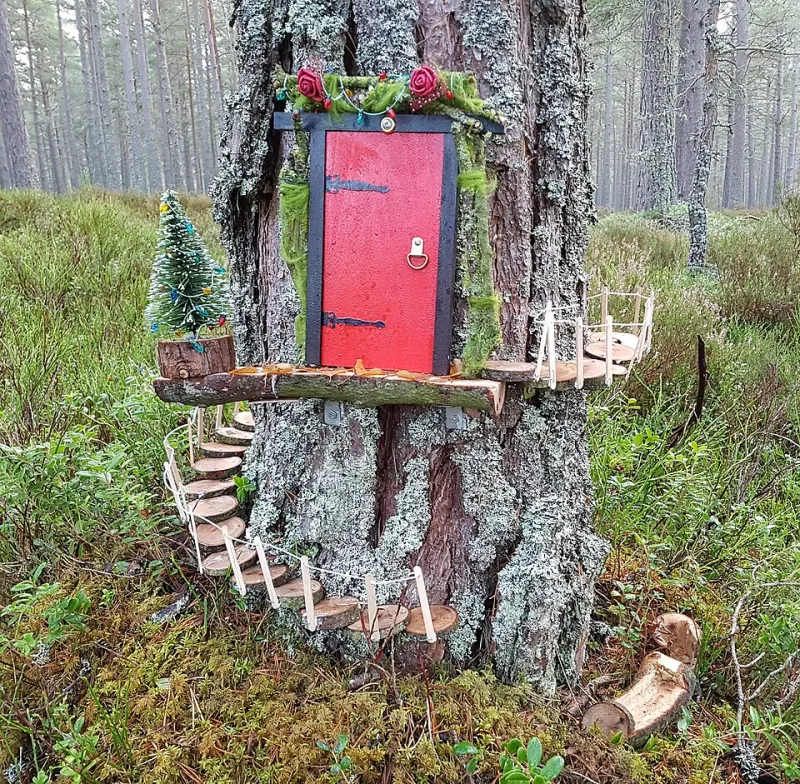
Photo: S. Rae, CC BY 2.0, via Wikimedia Commons
A tiny door at the base of a tree is supposed to be charming. It suggests fairies, secret gardens, a world where the biggest problem is whether the miniature welcome mat is crooked. Then someone measures it, someone else photographs it, and the homeowners association sends a letter that begins with the phrase it has come to our attention. Suddenly the door is not whimsy. It is a zoning question with hinges.
Across the country, small public art keeps running into large private rules. Fairy doors, miniature libraries, sidewalk dioramas, painted rocks, and tiny scenes tucked into tree hollows are all part of the same impulse: make the everyday world feel a little less ordinary. The impulse is generous. The paperwork is not.
Whimsy, Meet the Clipboard
The conflict usually starts small. A resident installs a fairy door in a public right-of-way or on a tree near the sidewalk. Neighbors love it. Kids leave notes. Someone starts a Facebook group. Then the architectural review committee gets involved, and the language turns majestic. Is the door a structure? A sign? An attractive nuisance? A gateway to unlicensed fantasy? Does it violate setback requirements? Is it accessible? Does it drain properly?
The tiny door is now a Rorschach test with a doorknob. Some people see community. Some see clutter. Some see unpaid labor. Some see a slippery slope toward gnome-based anarchy. The HOA sees a precedent, which is the most terrifying thing an HOA can see.
The Squirrel Has Counsel
In one especially spirited neighborhood dispute, the central figure was not a fairy but a ceramic squirrel. The squirrel sat near a tiny door and a miniature mailbox. It wore a small scarf. It had, by all accounts, a reputation. Children loved it. Dog walkers greeted it. Someone gave it a name, and then someone else gave it a nickname, and then a third person wrote a letter claiming the squirrel was not on the deed and therefore could not legally vote on neighborhood matters.
That last part may be a joke, but the sentiment is real. Neighborhood politics has a way of turning small objects into symbols. The squirrel is not a squirrel. The squirrel is a question about who gets to shape the shared aesthetic of a street. The tiny door is not a door. It is a claim that public space can be playful. The letter from the HOA is not a letter. It is a reminder that public space is also regulated.
Why Tiny Things Make Large Feelings
Pop psychology has a few explanations for why a four-inch door can cause a six-month feud. Humans are territorial. We care about boundaries, even decorative ones. We also care about fairness. If one person gets to decorate the sidewalk, why not everyone? And if everyone gets to decorate, who decides when decoration becomes debris?
There is also the matter of social signaling. A fairy door says something about the person who installed it: playful, community-minded, maybe a little chaotic. A complaint about the fairy door says something about the person who filed it: rule-following, order-seeking, maybe a little exhausting. Once those identities harden, the door itself stops mattering. The argument becomes about who belongs in the neighborhood and who gets to define its personality.
The Rules Are Real, the Rules Are Weird
Not every objection is petty. HOAs and local governments have legitimate concerns about liability, accessibility, drainage, and maintenance. A small object can become a tripping hazard. A mini-library can become a soggy box of moldy paperbacks. A painted rock can become litter with a smiley face. The problem is that the rules were not written with fairy doors in mind, so applying them requires a kind of bureaucratic improvisation. One committee interprets a door as a sign. Another treats it as landscaping. A third decides it is a structure and asks for a permit, which is how you end up with a grown adult explaining the concept of a fairy easement to a neighbor holding a clipboard.
The Compromise Industrial Complex
Most disputes end in compromise, because most people do not actually want to spend their evenings annotating photographs of a tree stump. The door gets moved to a common area. The squirrel gets a plaque. The mini-library gets a weatherproof lid and a stern note about returning books. Someone volunteers to maintain it. Someone else volunteers to stop talking about it at every meeting.
These resolutions are not glamorous, but they are deeply American: a small public good, a small private rule, and a negotiation conducted in the space between them. The fairy door survives, slightly relocated. The HOA survives, slightly humbled. The squirrel, unelected but influential, remains in place.
And the neighborhood learns something useful about itself. It can handle whimsy. It just needs a quorum.